BecauseĀ of you…

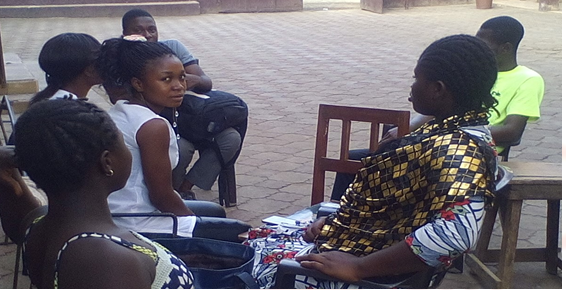
Ministry has launched in Kindia and is expanding to the provincial towns. A recent camp saw three young people commit their lives to Christ. Ministry in schools is going very well.

Prayer Needs

  • Wisdom in finding good staff and volunteers for the new ministry to come alongside the National Coordinator.
  • Salvation of young people in this nation.
  • Funding to support the ministry.

About Guinea

Guinea

Location of Guinea

Introduction

Guinea has had a history of authoritarian rule since gaining its independence from France in 1958. Lansana CONTE came to power in 1984 when the military seized the government after the death of the first president, Sekou TOURE. Guinea did not hold democratic elections until 1993 when Gen. CONTE (head of the military government) was elected president of the civilian government. He was reelected in 1998 and again in 2003, though all the polls were marred by irregularities. History repeated itself in December 2008 when following President CONTE's death, Capt. Moussa Dadis CAMARA led a military coup, seizing power and suspending the constitution. His unwillingness to yield to domestic and international pressure to step down led to heightened political tensions that culminated in September 2009 when presidential guards opened fire on an opposition rally killing more than 150 people, and in early December 2009 when CAMARA was wounded in an assassination attempt and evacuated to Morocco and subsequently to Burkina Faso. A transitional government has been installed.

Geography

Location

Location: Western Africa, bordering the North Atlantic Ocean, between Guinea-Bissau and Sierra Leone
Geographic Coordinates: 11 00 N, 10 00 W

Area

Total Area: 245,857 sq km Rank: 78
Land Area: 245,717 sq km
Water Area: 140 sq km
Comparison: slightly smaller than Oregon
Land Boundaries: 3,399 km
Bordering Countries: Cote d'Ivoire 610 km, Guinea-Bissau 386 km, Liberia 563 km, Mali 858 km, Senegal 330 km, Sierra Leone 652 km
Coastline: 320 km

Climate

generally hot and humid; monsoonal-type rainy season (June to November) with southwesterly winds; dry season (December to May) with northeasterly harmattan winds

Terrain

generally flat coastal plain, hilly to mountainous interior

Elevations

Lowest Point: Atlantic Ocean 0 m
Highest Point: Mont Nimba 1,752 m

Natural Resources

bauxite, iron ore, diamonds, gold, uranium, hydropower, fish, salt

Land Use

Arable land: 4.47%
Permanent Crops: 2.64%
Other: 92.89% (2005)
Irrigated Land: 950 sq km (2003)
Renewable Water Resources: 226 cu km (1987)
Total Freshwater withdrawal (domestic/industrial/agricultural): 1.51 cu km/yr (8%/2%/90%)
Freshwater Withdrawal Per Capita: 161 cu m/yr (2000)

Environment

Natural Hazards: hot, dry, dusty harmattan haze may reduce visibility during dry season
Environmental Issues: deforestation; inadequate supplies of potable water; desertification; soil contamination and erosion; overfishing, overpopulation in forest region; poor mining practices have led to environmental damage
Environmental Agreements: Party to: Biodiversity, Climate Change, Climate Change-Kyoto Protocol, Desertification, Endangered Species, Hazardous Wastes, Law of the Sea, Ozone Layer Protection, Ship Pollution, Wetlands, Whaling

Geography Notes

the Niger and its important tributary the Milo have their sources in the Guinean highlands

People

Population: 10,057,975 (July 2010 est.) Rank: 81

Age Structure

0-14 years: 42.8% (male 2,175,852/female 2,128,518)
15-64 years: 53.7% (male 2,701,184/female 2,704,161)
65 years and over: 3.5% (male 153,053/female 195,207) (2010 est.)
Median Age: 18.3 years

Population Growth

Growth Rate: 2.572% (2010 est.) Rank: 31
Birth Rate: 37.52 births/1,000 population (2010 est.) Rank: 25
Death Rate: 11 deaths/1,000 population (July 2010 est.) Rank: 43
Net Migration Rate: -0.8 migrant(s)/1,000 population (2010 est.) Rank: 113

Urbanization

Urban Population: 34% of total population (2008)
Rate of Urbanization: 3.5% annual rate of change (2005-10 est.)

Life and Death

Infant Mortality Rate: 65.22 deaths/1,000 live births Rank: 31
Life Expectancy at Birth: 57.09 years Rank: 191
Fertility Rate: 5.15 children born/woman (2010 est.) Rank: 20

Health and Disease

HIV/AIDS - Adult Prevalence Rate: 1.6% (2007 est.) Rank: 41
People living with HIV/AIDS: 87,000 (2007 est.) Rank: 48
HIV/AIDS Deaths: 4,500 (2007 est.) Rank: 46
Degree of Risk for Major Infectious Diseases: very high
Food or waterborne diseases: bacterial and protozoal diarrhea, hepatitis A, and typhoid fever
Vectorborne Diseases: malaria and yellow fever
Water Contact Diseases: schistosomiasis
Animal Contact Diseases: rabies

Nationality and Culture

Noun: Guinean(s)
Adjective: Guinean
Ethnic Groups: Peuhl 40%, Malinke 30%, Soussou 20%, smaller ethnic groups 10%
Religion: Muslim 85%, Christian 8%, indigenous beliefs 7%
Languages: French (official); note - each ethnic group has its own language

Education

Literacy (Meaning, age 15 and over can read and write): 29.5% Male: 42.6% Female: 18.1% (2003 est.)
School life expectancy (primary to tertiary education): 8 years Male: 10 years Female: 7 years (2006)
Education expenditures: 1.6% of GDP (2005) Rank: 173

Government

Country Name

Conventional Long Form: Republic of Guinea
Conventional Short Form: Guinea
Local Long Form: Republique de Guinee
Local Short Form: Guinee
Formerly: French Guinea
Government Type: republic
Capital: Conakry Geographic Coordinates: 9 33 N, 13 42 W

Administrative divisions

33 prefectures and 1 special zone (zone special)*; Beyla, Boffa, Boke, Conakry*, Coyah, Dabola, Dalaba, Dinguiraye, Dubreka, Faranah, Forecariah, Fria, Gaoual, Gueckedou, Kankan, Kerouane, Kindia, Kissidougou, Koubia, Koundara, Kouroussa, Labe, Lelouma, Lola, Macenta, Mali, Mamou, Mandiana, Nzerekore, Pita, Siguiri, Telimele, Tougue, Yomou
Independence: 2 October 1958 (from France)
National holiday: Independence Day, 2 October (1958)
Constitution: 23 December 1990 (Loi Fundamentale)
Legal system: based on French civil law system, customary law, and decree; accepts compulsory ICJ jurisdiction with reservations
Suffrage: 18 years of age; universal

Executive Branch

Chief of State: Gen Sekouba KONATE, interim leader of the National Council for Democracy and Development, replaced Capt. CAMARA following the attempted assassination of CAMARA on 3 December 2009
Head of Government: Prime Minister of the Transitional Government Jean-Marie DORE (since 26 January 2010)
Cabinet: Council of Ministers appointed by the president
Elections: president elected by popular vote for a seven-year term (no term limits); candidate must receive a majority of the votes cast to be elected president; election last held on 27 June 2010 with a runoff election scheduled for 19 September 2010
Election Results: a runoff election between Cellou Dalein DIALLO and Alpha CONDE, the two candidates receiving the most votes, is scheduled for 19 September 2010; percent of vote (first round) - Cellou Dalein DIALLO 43.7%, Alpha CONDE 18.2%

Legislative Branch

unicameral People's National Assembly or Assemblee Nationale Populaire (114 seats; members elected by a mixed system of direct popular vote and proportional party lists)
Elections: last held on 30 June 2002 (legislative elections first due in 2007 have been rescheduled multiple times and are currently unscheduled)
Election Results: percent of vote by party - PUP 61.6%, UPR 26.6%, other 11.8%; seats by party - PUP 85, UPR 20, other 9

Judicial branch

Court of First Instance or Tribunal de Premiere Instance; Court of Appeal or Cour d'Appel; Supreme Court or Cour Supreme

Politics

Political Parties and Leaders: Democratic Union of Guinea or UDG [Mamadou SYLLA]; Guinean Union for Democracy or UGD; New Democratic Forces or NDF [Muoctar DIALLO]; Party for Unity and Progress or PUP [Sekou KONATE]; Rally for the Guinean People or RPG [Alpha CONDE]; Union for Progress and Renewal or UPR [Ousmane BAH]; Union for Progress of Guinea or UPG [Jean-Marie DORE, secretary-general]; Union of Democratic Forces of Guinea or UFDG [Cellou Dalein DIALLO]; Union of Republican Forces or UFR [Sidya TOURE]; United Front for Democracy and Change or FUDEC [Francois FALL]
Political Pressure Groups and Leaders: National Confederation of Guinean Workers-Labor Union of Guinean Workers or CNTG-USTG Alliance (includes National Confederation of Guinean Workers or CNTG [Rabiatou Sarah DIALLO] and Labor Union of Guinean Workers or USTG [Dr. Ibrahima FOFANA]); Syndicate of Guinean Teachers and Researchers or SLECG [Dr. Louis M'Bemba SOUMAH]
International Organization Participation: ACP, AfDB, AU (suspended), ECOWAS (suspended), FAO, G-77, IBRD, ICAO, ICCt, ICRM, IDA, IDB, IFAD, IFC, IFRCS, ILO, IMF, IMO, Interpol, IOC, IOM, ISO (correspondent), ITSO, ITU, ITUC, MIGA, MINURSO, NAM, OIC, OIF, OPCW, UN, UNCTAD, UNESCO, UNHCR, UNIDO, UNMIS, UNOCI, UNWTO, UPU, WCO, WFTU, WHO, WIPO, WMO, WTO
Flag Description: three equal vertical bands of red (hoist side), yellow, and green; red represents the people's sacrifice for liberation and work; yellow stands for the sun, for the riches of the earth, and for justice; green symbolizes the country's vegetation and unity
Note: uses the popular Pan-African colors of Ethiopia; the colors from left to right are the reverse of those on the flags of neighboring Mali and Senegal

Economy

Economy Overview: Guinea possesses major mineral, hydropower, and agricultural resources, yet remains an underdeveloped nation. The country has almost half of the world's bauxite reserves. The mining sector accounts for more than 70% of exports. Long-run improvements in government fiscal arrangements, literacy, and the legal framework are needed if the country is to move out of poverty. Investor confidence has been sapped by rampant corruption, a lack of electricity and other infrastructure, a lack of skilled workers, and the political uncertainty because of the death of President Lansana CONTE in December 2008. International donors, including the G-8, the IMF, and the World Bank, cut their development programming significantly in response to the coup. Growth rose slightly in 2006-08, primarily due to increases in global demand and commodity prices on world markets, but the standard of living fell. The Guinea franc depreciated sharply as the prices for basic necessities like food and fuel rose beyond the reach of many Guineans.

Gross Domestic Product

GDP (purchasing power parity): $10.16 billion (2009 est.) Rank: 146
GDP - real growth rate: -3.5% (2009 est.) Rank: 173
GDP - per capita (PPP): $1,000 (2009 est.) Rank: 214
GDP - Composition by Sector: Agriculture: 24.2% Industry: 38.5% Services: 37.3% (2009 est.)

Labor Force

Labor Force: 4.392 million (2007 est.) Rank: 81
Labor force - by occupation: Agriculture: 76% Industry and Services: 24% (2006 est.)
Unemployment Rate: NA est.)

Poverty

Population below poverty line: 47% (2006 est.)

Transnational Issues

International Disputes: conflicts among rebel groups, warlords, and youth gangs in neighboring states have spilled over into Guinea resulting in domestic instability; Sierra Leone considers Guinea's definition of the flood plain limits to define the left bank boundary of the Makona and Moa rivers excessive and protests Guinea's continued occupation of these lands, including the hamlet of Yenga, occupied since 1998
Refugees and internally displaced persons - refugees (country of origin): 21,856 (Liberia); 5,259 (Sierra Leone); 3,900 (Cote d'Ivoire)
International Displaced Persons: 19,000 (cross-border incursions from Cote d'Ivoire, Liberia, Sierra Leone) (2007)

Want to know more? Show Full Profile